

Fear and Greed Index: How Crypto's 'Mood Thermometer' Works
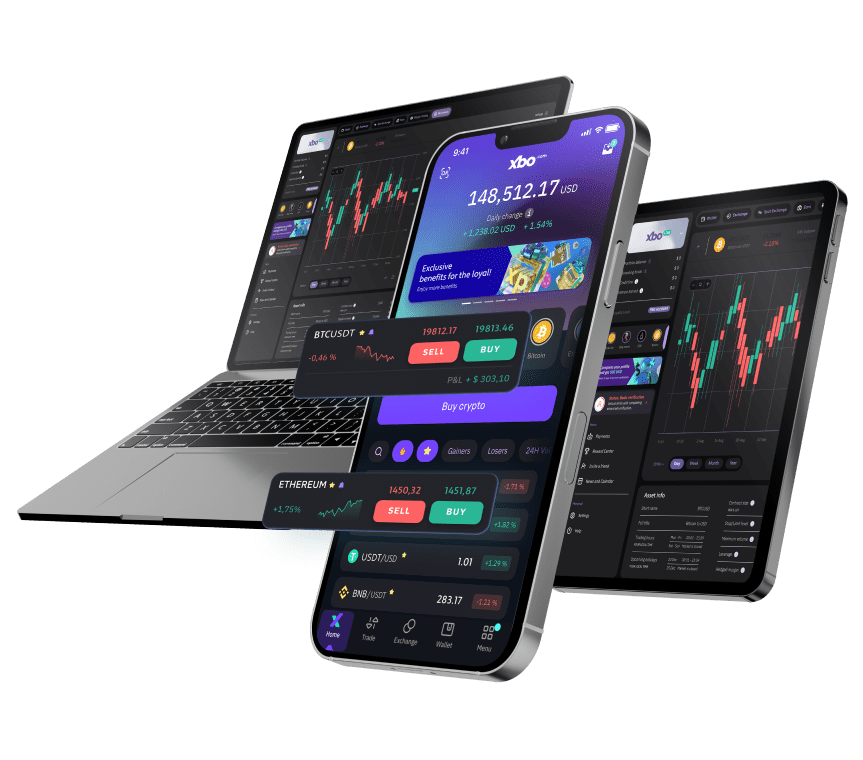
If you've looked at your XBO.com dashboard lately, you've probably seen the Fear and Greed Index climbing into "greed" territory. It's one of the most-watched crypto trading indicators, and many investors consider it when making decisions.
But what does this index actually measure, how should you read it, and what are its limitations? Let's take a closer look.
What is the Fear and Greed Index?
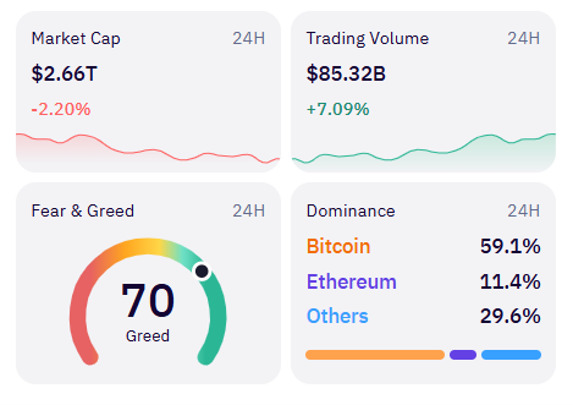
The Fear and Greed Index in crypto is a single number, from 0 to 100, that measures the mood of the market, ranging from fear (cautious and pessimistic) to greed (confident and optimistic).
It reflects how the market “feels” right now and provides an overall crypto sentiment analysis based on a mix of measurable criteria, including:
- Price volatility over recent weeks
- Market momentum and trading volume
- Social media activity, mainly posts about crypto on X
- Bitcoin's dominance, its share of the total crypto market
- Google search trends for crypto terms
Importantly, the index is not a prediction tool. It measures present crypto market sentiment and doesn’t attempt to forecast future movements.
What the numbers mean
The index runs on a scale from 0 to 100, split into five score bands, each marking a different mood:
- 0 to 24: Extreme Fear. Crypto market is deeply pessimistic, with fear of heavy losses.
- 25 to 49: Fear. The market is cautious and nervous.
- 50 to 54: Neutral. Balanced, leaning neither way.
- 55 to 74: Greed. Optimism building, buyers more confident.
- 75 to 100: Extreme Greed. Crypto market is highly optimistic, and confidence runs high.
How traders use the index
The Fear and Greed Index is often used as a quick read on market sentiment, a way to sense the crypto market mood before making a decision.
Meanwhile, some traders treat the index as a contrarian signal, acting against the crowd's mood rather than with it. The idea traces back to Warren Buffett's advice to be "fearful when others are greedy, and greedy when others are fearful."
For a contrarian trading crypto, that means:
- Low readings (fear). The majority is pessimistic and prices are often down. Contrarians may see a buying opportunity, judging that the market has fallen too far.
- High readings (greed). The majority is optimistic and prices are often up. Contrarians tend to sell or hold back, wary the rally is running out of room.
What the index doesn't tell you
For all its usefulness, the index is not a predictor. It reflects the market's current state but doesn’t forecast its future direction. Looking at historical data, you'll see that Bitcoin and Fear and Greed tend to move together, with the index often rising and falling alongside the coin’s price. Still, tracking a movement is not the same as forecasting it.
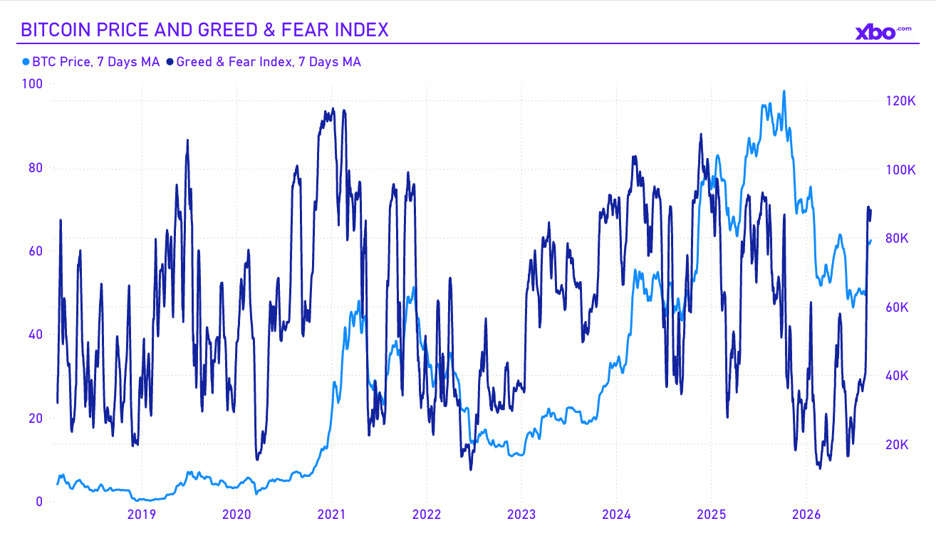
This is why a Fear and Greed Index reading should never be treated as a trading signal on its own. A high reading does not automatically mean sell, just as a low reading is not necessarily a sign to buy. The index can tell you how crypto feels, but not what it will do next, and acting on sentiment alone leaves out everything else that moves the market.
See where things stand
The Fear and Greed Index is most useful for staying level-headed when the market runs to extremes. Some traders follow the sentiment; others use it as a contrarian signal. Either way, it's one input among many when weighing your next move.
Find today's reading on your XBO.com dashboard and judge the mood for yourself.
Disclaimer: Our content does not constitute financial advice. It is only intended for informational and educational purposes.